Under pressure for perfection. The invisible side of online bullying against girls
By Valeria Pramatarova
Beautiful, but not provocative. Smart, but not arrogant. Active, but inaccessible. In the era of TikTok, Instagram, and YouTube, social media has become a place where young girls and women build not only friendships but also their identities.
However, instead of being free to express themselves, they increasingly find themselves trapped, as the attention they receive seems to depend on their appearance, behavior, and whether they conform to the imposed “rules” for girls.
This is not the classic online bullying, in which there are direct insults or aggressive messages. It is about more subtle but constant mechanisms – such as comments, reactions, and trends – that force girls to fit into certain frames and try to meet unattainable requirements.
The pressure to look “good” to be liked and respected
Zhulia Strandzhalieva is 18 years old and uses Instagram and YouTube every day. She sees them as inspiration and ideas, but also as hidden pressure.
“Pressure from me on me, no. Pressure from others on me, yes. When we are all exposed to an idea of beauty and when others see that you don’t fit it, they start to direct your attention to things you didn’t think you could be worried about,” she tells sCOOL Media.
Julia rarely uploads her photos on social media to avoid unnecessary comments.
“When you get tons of positive comments about being the most beautiful in the world, and even just one about something being wrong with your face – it’s over. You stop believing the positive ones,” she says.
18-year-old Tsvetelina Palova, who spends her time mainly on Instagram and TikTok, shares a similar experience.
“I’ve deleted a post, but I’ve never cared what people say about it. I’m more concerned about how people are doing everything they can to not look like themselves in order to avoid getting hate,” she tells sCOOL Media.
Tsvetelina is also critical of some influencers, who she believes are not very good influencers for children:
“Starting from Andy Studio (popular YouTubers who make comedy videos – ed.), to Lili Anachkova (known for her TikTok content – ed.). They create patterns of behavior that often confuse children,” says Tsvetelina.
What the trends show
On TikTok and Instagram, new trends are born almost every day, which at first glance seem harmless, but often carry messages that shape unrealistic expectations for girls.
One of the most popular is “That Girl” – the image of the girl who gets up early, works out every day, eats healthy, looks flawless and lives in an orderly aesthetic environment. For some, this model is an inspiration, but for others it becomes a source of pressure and a feeling that they are not good enough.
A similar effect is also caused by beauty filters, which artificially smooth the skin and even change the facial structure. Their daily use leads to a point where girls begin to believe that they should look like the filtered version of themselves.
Other popular trends such as “pick me girl” or “vs. all girls” mockingly contrast girls with each other and leave them with no chance to fit in. According to them, if you look natural, you are “unkempt”, but if you wear makeup, you are “hungry for attention”.
In the Bulgarian context, such messages are often found in TikTok videos with thousands of views that present the “ideal girl”. Comments like “you’re so simple,” “you’re doing it for attention,” or “you’re too easy” appear in the comments below when girls dare to express their opinions. In this way, social media gradually turns stereotypes into the norm and individuality into the exception.
How this affects young girls
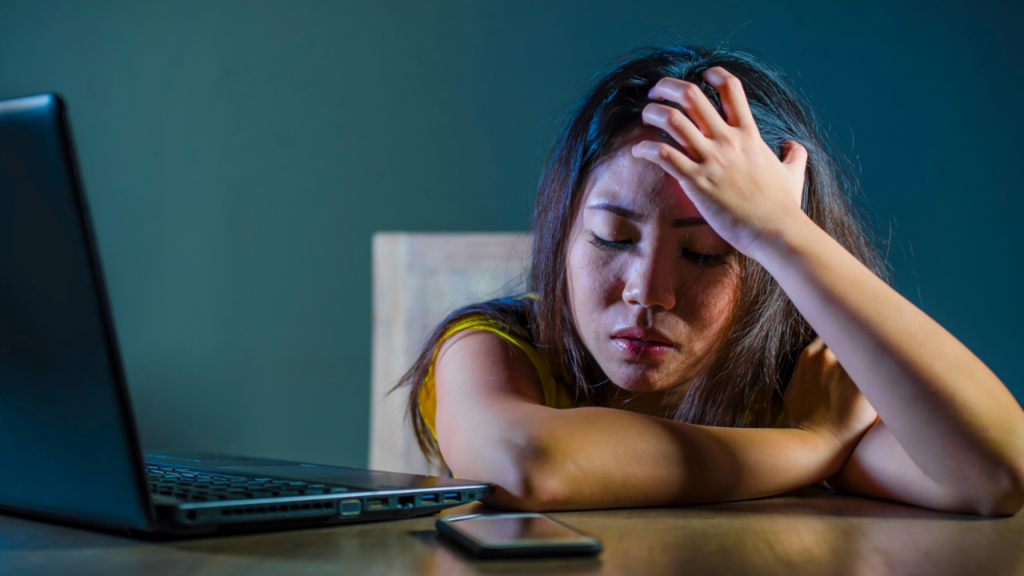
International and Bulgarian research data show that social media has a direct impact on teenagers’ self-esteem, and girls are particularly vulnerable.
According to a 2025 Pew Research Center study, almost half of teenagers in the United States admit to feeling significant or moderate pressure to look good online.
Girls are the ones who more often indicate that social media undermines their confidence and makes them compare themselves to unrealistic standards.
Similar results are shown by the 2021 Dove Self-Esteem Project global study, according to which one in two girls in the world feels worse because of comparisons with content they see on the Internet.
The trends in Bulgaria are no different. The National Safer Internet Center reports that in 2023 alone, over 46,000 reports of harmful online content were filed, which is almost double the previous year.
In studies by organizations such as the National Center for Safer Internet and the Parents Association Foundation, between 25 and 30% of teenagers admit to having been the target of online ridicule and insults, and girls are significantly more likely to delete photos and posts due to fear of negative reactions. The numbers show that the online environment is not just a place to communicate, but a factor that shapes ideas about appearance, “acceptable” behavior and personal value.
Julia is adamant that the pressure is not felt immediately. “It’s not directly the moment you look at something and think you’re ugly. It happens slowly. Subconsciously,” she says. This process can be called the invisible side of online bullying.
The subtle comments and imposed standards seem normal. But they are the ones that leave the deepest marks on self-esteem and personality. Girls begin to self-censor themselves, to ask themselves if they are pretty enough, if they say too much, if they show too much. This leads to internal conflict and low self-esteem.
Voices Against Online Bullying
However, there are also those who speak out about the problem. Influencer Isabel Ovcharova is among the most visible young people in Bulgaria who use social media to speak out against hate and bullying against girls online. In her videos, books and podcast, she often touches on topics such as self-esteem, mental health and the dangers of unrealistic beauty standards.
Her message is clear – authenticity is more important than filtered images, and the freedom to be yourself should not be sacrificed for the sake of likes and followers. Such messages resonate strongly with young girls who feel the pressure of social media on a daily basis and are looking for role models outside of toxic trends.
The National Center for Safer Internet plays a significant role in the fight against online bullying. It offers consultations, trainings and campaigns for parents, teachers and students, and initiatives such as Cyber Scout – a program in which students are trained to respond to online risks – involve young people themselves in creating a healthier digital environment.
In parallel, a number of other people and organizations in Bulgaria – from artists and journalists to UNICEF campaigns such as “Beyond Smiles” – are striving to give visibility to the problem and encourage society to seek solutions. This is how a common front is being built against the culture of hate and the subtle pressure that girls are subjected to online.
Can the environment change?
Despite the difficulties and pressure, Julia and Tsvetelina believe that the environment can change. “Not to impose the same model on everyone. To introduce trends that support diversity,” says Julia.
“Everyone should be free to do what they want,” adds Tsvetelina.
Changing the online environment is difficult, but possible if efforts come from platforms, institutions and users themselves.
On the one hand, social networks can introduce stricter algorithms to limit hate speech and promote content that supports diversity and individuality. On the other hand, schools and parents also have a key role to play. By talking about digital culture, media literacy and critical thinking, they can give young people the tools to deal with online pressure.
The most important factor remains young people themselves. Social networks can be a place of pressure and comparison, but also a space for support, solidarity and courage. When more girls and boys choose to share authentic stories and support instead of attack, a culture will be created where respect does not depend on appearance or likes, but simply on the personality behind the screen.
Funded by the OPEN SPACE Foundation (OSF) project “Youth against disinformation”, implemented in partnership with the Association of European Journalists in Bulgaria (AEJ-Bulgaria), with the support of the British Council in Bulgaria. However, the views and opinions expressed are entirely those of their author(s) and do not necessarily reflect the views and opinions of OSF, AEJ and the British Council in Bulgaria. Neither OSF, AEJ nor the British Council in Bulgaria are responsible for them.