
How can a mistake on the internet turn into a nightmare for a child?
By Natalie Petrova
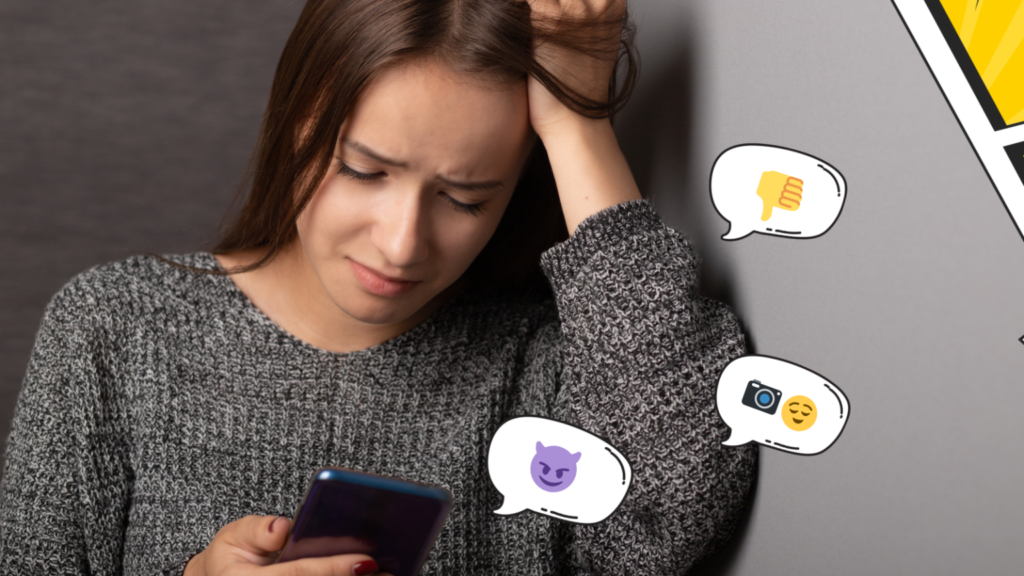
The online space is a place for communication, learning and entertainment for teenagers. But sometimes it turns into an arena of pressure, manipulation and fear. This story is true and happened very recently in a Bulgarian school.
How did it all start?
“My daughter was only 13 when she started texting a boy on Instagram. He was older, in ninth grade. At first it seemed romantic to her – they texted every day, shared secrets. But at one point he asked for something that shocked her – insisted on sending him naked photos,” says Veronika, Alexandra’s mother (names have been changed).
The girl refused, but sent photos in a swimsuit anyway. Soon after, the threats began: “If you don’t have sex with me, I will send your photos to everyone at school.” Despite her fear, Alexandra showed courage and blocked the boy. But the photos were now beyond her control. They began to spread in chats between students.
“A younger girl made a collage of the photos and fabricated a price list for sex services. It was already a nightmare. Not only for my daughter, but for all of us as a family,” the mother says.
The case reached teachers, the police and child protection. An investigation was launched, and the parents insisted that their daughter receive psychological support. “She refused to leave the house. She was afraid that someone would lie in wait for her. We, as parents, were powerless and looked for help everywhere,” says Veronika.
The case did not remain hidden for long. After the photos began to circulate, another incident occurred at the school, which coincidentally revealed this story as well. The teachers alerted the parents, and subsequently the police.
“We went through everything – meetings with the school administration, conversations in the children’s pedagogical room, in child protection. We gave statements to the police. It was important for us that this not be swept under the rug,” says the mother.
The investigation found that the boy had distributed the photos in a swimsuit, but had not participated in the creation of the offensive collage. The guilty girl turned out to have had previous similar actions. All materials were handed over to the prosecutor’s office, but since the photos were not nude, the case was not classified as a crime.
“I received a letter that the act was not considered a crime in the legal sense. But for us as parents, it was a crime – against the dignity of my daughter,” the mother said.
Instead of criminal proceedings, the children were imposed educational measures by a children’s pedagogical room and they are obliged to visit it during the summer, as well as to have a consultation with a psychologist. The school, in turn, imposes disciplinary sanctions – the students are obliged to attend psychotherapy sessions.
Alexandra’s story shows that even when institutions intervene, the process can be slow and the limitations of the law leave gaps. In order to understand what the real consequences are for children and how we can protect them, we sought the opinion of specialists.
“Such situations in children aged 12–13 are extremely sensitive, because at this age the personality and value system are still being built,” says Milena Slavkova, a psychologist at the Regional Center for Support of the Inclusive Education Process, Sofia Region.
The child may feel shame, guilt, fear and become socially isolated, which carries a risk of long-term consequences for his self-esteem and relationships. Therefore, it is important to receive support from the family, to work with a specialist to restore self-esteem and to build a trusting relationship with the parents. In parallel, it should be directed towards healthy ways of self-expression and affirmation, which do not go through showing off the body, but through his personal qualities and skills.
“Parents should actively monitor and manage access to social networks to prevent repeated risky situations,” Slavkova commented.
According to psychologists, children often feel fear and guilt even when they have done nothing wrong. The most important thing is to feel supported and understood, and parents should be the first people children turn to, psychologists believe.
“The response should be comprehensive – school, parents and psychological support,” explains Inspector Stoyan Ivanov from the children’s pedagogical room. According to him, the law does not fully cover cases in which the photos are in a swimsuit, but educational measures and school control can limit the spread and protect other children.
The police officer emphasizes that this story is an example of how vulnerable children are online. Since prevention is key, Inspector Ivanov gives some tips for protection.

For children:
Never send intimate or nude photos; if someone threatens you, immediately share with an adult you trust; keep evidence – photos, chats, screenshots; block and report the profile.
For parents:
Talk openly about the risks of the Internet – without scaring, but without belittling; build trust so that the child can share without fear of punishment; monitor behavior – mood swings, isolation and fears can be a sign of a problem; seek psychological help at the first signs of trauma.
Where to seek help:
National Children’s Hotline – 116 111;
Police – Cybercrime Sector;
State Agency for Child Protection;
Psychological centers and NGOs working with youth.
Alexandra’s case is not isolated. It shows that children are vulnerable on the internet, and talking to parents and getting support from schools and institutions is the key to prevention. “I want my story to help other parents stay close to their children and not underestimate the dangers of the internet,” says Veronika. Talking, listening and being there for them is the best protection.
Funded by the OPEN SPACE Foundation (OSF) project “Youth against disinformation”, implemented in partnership with the Association of European Journalists in Bulgaria (AEJ-Bulgaria), with the support of the British Council in Bulgaria. However, the views and opinions expressed are entirely those of their author(s) and do not necessarily reflect the views and opinions of OSF, AEJ and the British Council in Bulgaria. Neither OSF, AEJ nor the British Council in Bulgaria are responsible for them.