
Gossip that hurts. What dangers do young people face in closed online groups?
By Ivet Atanasova
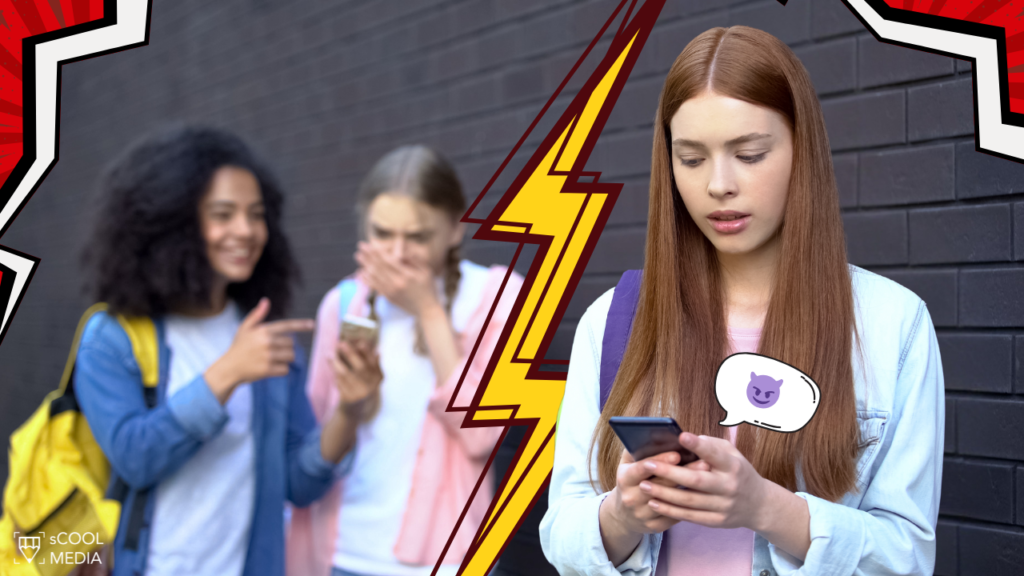
Closed groups for gossip, anonymous messages and unconfirmed rumors, presented with extreme malice and cynicism. This is the latest trend among young people on social networks – closed pages on Isntagram or public ones on TikTok.
There, those who do not fit in are humiliated, called names and publicly condemned, but pay the price of someone else’s cruelty. One local example is the Instagram page under the name klukite_na_silistra.
At first glance, these are just another profile and hashtag. In reality, however, communities are formed behind the screens, in which insults are exchanged as currency, and slander becomes the main content.
The rules are clear – you can say and write anything, as long as it remains within the framework of the page. Access is limited, publications are visible only to allowed followers, and information is spread at lightning speed, without the possibility of control from the outside. It is this isolation that makes such groups so dangerous: they operate under the radar of institutions, and there is no easy path to protection for those affected.
In the virtual darkness, petty conflicts easily escalate. Someone posts a humiliating joke. Mocking comments and shares follow. Thus, personal disputes become a public spectacle that can have serious consequences for the young people affected.
sCOOL Media managed to enter a local gossip group known as klukite_na_silistra and talk to a girl who was the subject of posts there.
“Their words can ruin a person’s life”

Nicole* is 16 years old and a tenth grader. She learned about the student gossip pages last year. From the very beginning, she did not accept the aggressive tone of the publications, which often exposed personal dramas.
One day, however, she received a message from a close friend – a link to a post on klukite_na_silistra, this time directed at Nicole herself. The post was offensive to Nicole, the language was mocking and cynical, and the author was unknown. However, the girl has her suspicions about who was behind the post.
“This girl and I were friends since seventh grade, but we had a fight. Then the attacks and verbal harassment began – she and her group discussed me loudly during class, loud enough for me to hear. They called me ugly names, humiliated me in front of the others,” Nicole tells sCOOL Media.
A year later, the tension was transferred online – with the offensive post on the Silistra gossip page. The reaction in the comments is mixed, with most people taking Nicole’s side and defending her. This is the first moment when the girl feels that she is not completely alone against the hostility.
Then she seeks support – she talks to the principal, her parents, the mother of the other student and their class teacher. The intervention of adults stops the overt insults. But the problem does not disappear – it simply redirects to others.
“When the attacks against me decreased, the aggression was directed at my friends. The girl continued to spread gossip on the page about my classmates and even teachers,” says Nicole.
“It is very ugly, but it is not the ugliest thing I have heard. Unfortunately, this is starting to become a mass practice – to seek revenge or attention through social networks, sometimes for minor reasons,” says Diana Hristova from the local commission for combating antisocial behavior of minors and juveniles at the Silistra Municipality, about the case of Nicole.
“People hide behind the screen and feel too brave. They don’t realize that their words can ruin a human life, a destiny. Sometimes this escalates into systematic harassment that lasts for weeks or months,” she adds.
Is there any point in gossip pages
In early February 2024, Zlatin* decided to create his own gossip page, inspired by an already popular one on Instagram, also related to the city of Silistra. In order to gain followers, he began following local students and gaining their trust.
The students responded in kind and gradually joined the group. As the creator, Zlatin’s identity remains a secret to all users. In just the first week, the page gathered nearly 100 followers. Messages to Zlatin rained down one after another: “On average, I received about 30 gossips per week,” he told sCOOL Media.
“There was always a risk – whether the information was true or not. But those who wrote were not anonymous, I knew who was behind the words. That way I could decide whether to publish,” the boy shares.
The age of his followers ranges from fifth graders to high school seniors. Gradually, however, the initial enthusiasm waned and after months of working behind the scenes, Zlatin decided to give up.
“I lost interest. In general, I don’t see any positives from these groups – there are only negatives,” he admits. And he adds:
“It was very sad to see how close friends started writing disgusting things behind each other’s backs. And I got disappointed when I read something rude – I even refused to upload it.”
How to react
“Unfortunately, there is no proven method for dealing with and preventing such harassment,” explains Nuray Osman, a psychologist at the St. Kliment Ohridski Primary and Secondary Education Center in the city of Silistra. According to her, talks can be held, cases can be discussed with students and they can be trained in correct reactions, as well as contacting teachers, educators or emergency lines.
“The problem is that many of these groups are closed. This makes it difficult to react in a timely manner and leaves victims vulnerable, because the aggressors operate in an environment where there is no control or supervision,” Osman says.
According to experts, this problem does not depend only on the family. Bullies can appear both among children in violent families and among those with good social status and exemplary parents. Often the decisive influence is the surrounding environment – neighbors, friends or classmates who support and encourage aggressive behavior. Therefore, although schools are actively working to prevent bullying, the possibility of timely intervention remains limited.
“It’s like giving a small child a knife or a gun and expecting them to learn to protect themselves – impossible,” says Iskra Yordanova, a high school teacher and mother of a 14-year-old girl.
Although her relationship with her daughter is close, she admits that she sometimes doubts whether her daughter would share if something was shared about her on social media. According to Yordanova, it is this fear that children keep quiet even when they are hurt that makes virtual dangers so difficult for parents to manage.
To protect her daughter, the mother limits her access to mobile devices through special parental control apps. She explains that this is not distrust, but an attempt to build a boundary in a world where risks are not always visible.
“I think I was even late with these measures. I myself did not have a phone at her age, and this deprived me of experience that would be useful to me now. In a sense, I feel unprepared as a parent, because children are growing up in a world that is changing much faster than we are able to comprehend,” Yordanova admits.
According to her, the most difficult thing is the balance – between the desire to provide freedom and trust and the constant fear that the online space can become a trap. She believes that any restriction must go hand in hand with conversation and trust, because neither one nor the other separately is enough to protect teenagers from the dangers of the network.
*Name has been changed for safety reasons.
Funded by the OPEN SPACE Foundation (OSF) project “Youth against disinformation”, implemented in partnership with the Association of European Journalists in Bulgaria (AEJ-Bulgaria), with the support of the British Council in Bulgaria. However, the views and opinions expressed are entirely those of their author(s) and do not necessarily reflect the views and opinions of OSF, AEJ and the British Council in Bulgaria. Neither OSF, AEJ nor the British Council in Bulgaria are responsible for them.